 Odessa · Midland
Permit first
With few exceptions, a septic system needs a permit and an approved plan before construction starts.
For land buyers, builders & realtors • Ector & Midland counties
Before you close on rural land, find out what a septic system will take on it: lot size, soil, the permit, and which system fits.
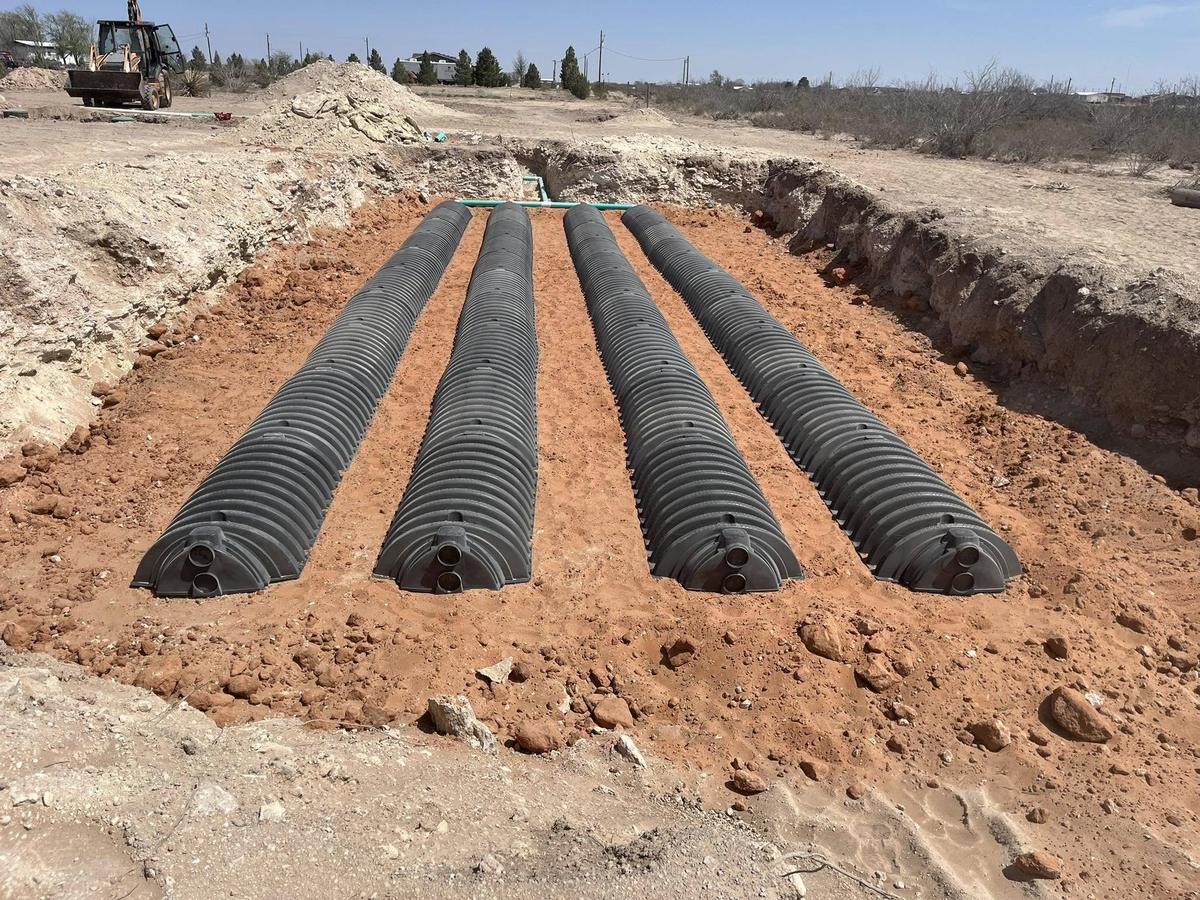
01 / Before you buy
With few exceptions, a septic system needs a permit and an approved plan before construction starts.
Lots in new subdivisions need at least ½ acre on public water, or 1 acre without it. Lots split up before 1988 can still qualify.
A 3-bedroom house under 2,500 sq ft is designed for about 300 gallons a day (240 with water-saving fixtures). Each bedroom adds about 75.
A licensed site evaluator checks the soil before the system is designed. Shallow caliche or rock can leave too little room for a drain field.
02 / Lot check
Four questions about the property. The numbers come from the Texas septic rules; the soil test on your lot has the final say.
Design flow: TCEQ usage table for single-family homes without water-saving fixtures, for houses up to 1,500 sq ft (1–2 bedrooms) and 1,000 sq ft more per bedroom after that. *Minimum tank for a standard system from the same rule (30 TAC §285.91). Lot minimums: 30 TAC §285.4. This is a starting point, not a design.
03 / The process
A new system in Texas goes through these five steps, and the permit comes before any construction.
A licensed site evaluator digs test holes and checks the soil. That decides what the lot can take.
The system is sized from the bedrooms and the soil.
The county or city issues an authorization to construct. Nothing goes in the ground before that.
A licensed installer sets the tank and lays the drain field to the approved plan.
The permit office inspects the work before it's covered. Once it passes, the system is approved for use.
Ask JRC how these steps would go for your lot.
Ask JRC about a lot04 / Questions
Almost always. In Texas a new, replaced or expanded septic system needs a permit and an approved plan before construction starts. The main exception is a single home that's the only house on 10 acres or more, with the whole system at least 100 feet from the property line. Check with the permit office before counting on it. See the process above.
The soil test on your lot decides. A tank and drain field needs soil that drains and room for the field. Shallow caliche or rock, or a small lot, can rule it out, so find out before you buy. The lot check gives you a first look.
It depends on the system type, the soil, the size of the house, and the design and permit fees. JRC talks price with you once they know the property.
Put it in the notes when you send the request, and ask JRC on the call whether it fits what they take on.
05 / Send JRC the lot
The address or nearest crossroads, what you plan to build, and your timeline. About a minute.
Rather talk it through? Call (432) 308-9708
Start a project
Step 1 of 4Here's what happens next: